
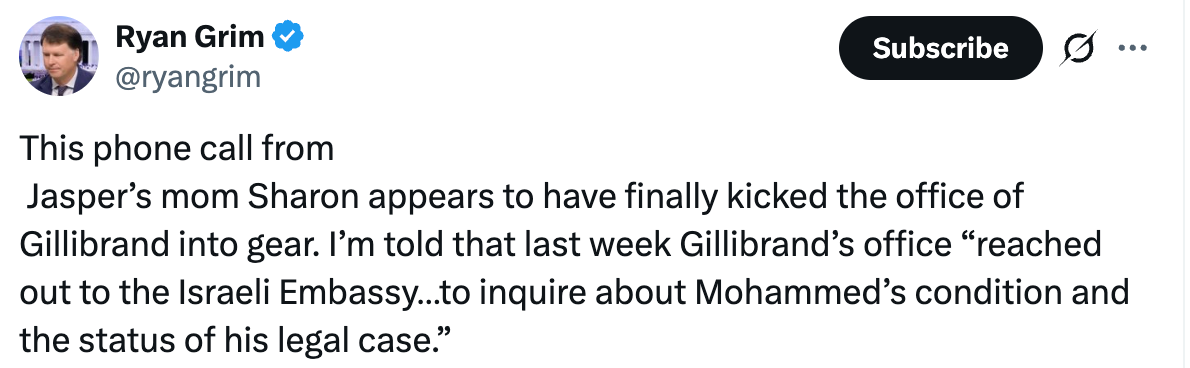
The past week has been full of joy: 16-year-old Mohammed Zahir Ibrahim was released from Israeli military detention on Thursday after 9.5 months—and two days later, his three (non-American) friends arrested alongside him walked free too. In all the excitement, I realized I never actually posted about it here. Hopefully you’ve heard the news by now—if not, you can get the basic details from this thread on X, and I’ll share more about how it happened in an upcoming piece.

If you’ve been following the story, one face you’ve probably seen in the reunion photos and videos—often the one texting me updates in real time—is Kamel Musallet, Mohammed’s uncle and the father of 20-year-old Palestinian American Sayfollah Musallet, who was beaten to death by Israeli settlers in July. Mohammed’s return has been a whiplash of joy and fresh grief for Kamel. As he welcomed his nephew home, he watched him learn that his cousin had been murdered, a moment that ripped open wounds the family has been carrying ever since. (I wrote about Kamel and the broader community of Palestinian American families fighting for justice in Washington in a recent piece for The Paris Review: A Hill To Die On.)
In our conversation, we talk about what this week has been like for him, the details of the day Saif was killed, the role the IDF played, and Ambassador Mike Huckabee’s initial expression of concern followed by months of silence. We also go deep on the specific struggle in Al-Mazra‘a al-Sharqiya, where settlers have taken over the private Palestinian olive groves that families have tended for generations, and are now using the hilltop as a strategic position to launch attacks and threaten nearby towns.
It’s a long interview, but in my opinion, an important—and very moving—one, illuminating a real story about a town’s fight for survival in the West Bank and the human stakes of this moment. I hope you’ll watch the whole thing.
Jasper
PS — I talked about Mohammed’s release on The Majority Report (26:30) and Bad Hasbara (9:00) this week.
If you’re looking for a meaningful holiday gift, might I suggest putting it toward independent journalism?
Last week offered a reminder of what this work can actually do—especially with a mainstream media that refuses to hold power to account. The settler I documented clubbing a grandmother in a video that drew international outrage was indicted on terrorism charges. A few hours later, 16-year-old Mohammed Ibrahim—whose case I’ve covered almost daily since July while most outlets ignored it—was freed from Israeli military detention.
All of my reporting is self-funded. If you want to help me keep doing it, consider gifting a paid subscription to my newsletter—for yourself or for someone who needs it.


